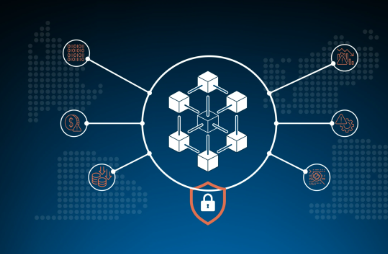

Staking converts idle assets into active participation that underpins consensus and security. Validators lock stake to back network operations, earning rewards and facing penalties for misbehavior. This alignment enhances uptime, honesty, and throughput while supporting governance. The incentives encourage prudent upgrades and disciplined delegation. Diversified participation reduces systemic risk and promotes resilience. Yet, the evolving balance of stake, slashing, and governance signals a complex trade-off that invites further examination of long-term network health.
What Is Staking and How It Secures Blockchains
Staking refers to the process by which participants hold and lock up cryptocurrency assets to participate in the validation and governance of a blockchain network. The mechanism converts ownership into active stake, creating economic signals that align participant behavior with network security. Staking economics shapes capital efficiency, while validator incentives drive performance, reliability, and adherence to protocol rules.
How Staking Improves Uptime, Security, and Throughput
The architecture of proof-of-stake systems leverages economic penalties and rewards to align operator behavior with network health, yielding measurable gains in uptime, security, and throughput.
Staking economics encodes risk–reward dynamics that discourage slashing and promote prompt validator response.
Validator incentives correlate stake, performance, and governance alignment, enhancing uptime reliability while constraining adversarial behavior through transparent, verifiable attestations and efficiency-driven throughput improvements.
How Stakers Shape Governance and Protocol Upgrades
As governance mechanisms mature in proof-of-stake ecosystems, stakeholder influence extends beyond operational incentives to shape protocol parameters, upgrade cadence, and policy decisions. Empirical observations indicate governance incentives align staker participation with long-run network health, while formal processes codify proposals and voting.
Stakeholder scrutiny correlates with measured protocol upgrades, reducing fragmentation and enhancing compatibility across deployments and economic models, supporting sustainable governance outcomes.
Practical Risks and Mitigation for Stakers
What practical risks accompany staking activities, and how can participants mitigate them effectively?
The analysis identifies staking risks including slashing exposure, liquidity constraints, and validator reliability.
Empirical mitigation strategies emphasize diversified validator selection, timely governance participation, and robust monitoring.
Governance impact emerges from vigilant stake delegation; protocol upgrades demand proactive readjustment.
See also: Essential Cryptocurrency Safety Practices for Beginners
Conclusion
Staking operates as the backbone of modern blockchains, turning capital into disciplined behavior. It aligns incentives through penalties and rewards, fostering robust uptime, security, and throughput. As validators coordinate, governance channels emerge, guiding protocol upgrades with empirical scrutiny and collective risk management. Yet, risks persist—from slashing and downtime to centralization pressures—necessitating diversified participation and vigilant monitoring. In this ecosystem, stake behaves like a controllable variable: carefully tuned, it stabilizes networks while enabling resilient evolution.