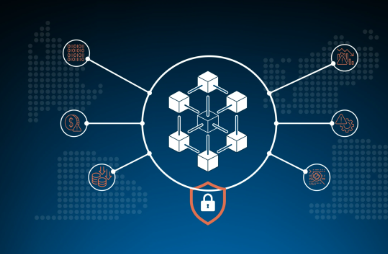

Blockchain provides a tamper-evident ledger where transactions are cryptographically hashed and grouped into blocks. Each block links to its predecessor via a secure hash, creating an immutable chain. Consensus mechanisms require network-wide validation before inclusion, ensuring alignment with predefined rules. This architecture distributes trust and preserves a single audit trail. The balance between cryptographic security, distributed verification, and governance invites further examination of real-world resilience and potential vulnerabilities.
What Blockchain Is and Why It Secures Transactions
Blockchain is a distributed ledger technology that records transactions across a network of computers in a way that ensures immutability and verifiability. The system distributes consensus, cryptographic linking, and transparent governance to secure data integrity.
Privacy auditing emerges as a tool to assess controls, while energy implications arise from consensus mechanisms, prompting evaluation of efficiency, scalability, and responsible deployment for freedom-oriented ecosystems.
How Blocks Lock in Transaction History
Through the distributed ledger framework, each recorded transaction is bound to a specific block, forming a chained sequence that anchors subsequent entries. Blocks enclose a cryptographic hash, timestamp, and transaction set, immutably locking history. This structure reinforces data privacy by restricting retroactive changes, while acknowledging energy consumption tied to network validation. The arrangement ensures traceability without sacrificing fundamental freedom.
How Consensus Prevents Tampering
Consensus mechanisms provide the procedural framework that ensures tamper resistance across the network. In distributed ledgers, validators adhere to predefined rules, converging on a single history. This consensus yields tamper evident ledgers by making retroactive alterations computationally prohibitive and easily detectable. The result is robust integrity, aligning independent participants around a common, auditable ledger without centralized control.
Real-World Case Studies: Blockchain Integrity Across Industries
The practical impact of tamper resistance becomes evident when examining diverse deployments that verify ledger integrity in real-world contexts. Real-world case studies demonstrate cross-industry applications, from supply chains to healthcare, where immutable records enable compliance and traceability without centralized control. Data privacy safeguards and energy efficiency gains emerge through optimized consensus, selective disclosure, and scalable architectures, supporting resilient, freedom-oriented digital ecosystems.
See also: Essential Cryptocurrency Safety Practices for Beginners
Conclusion
Blockchain technology secures transactions by creating a tamper-evident, append-only ledger underpinned by cryptographic hashes and distributed validation. Each block seals the previous one, forming an immutable chain, while consensus mechanisms require network-wide agreement before changes are recorded. This combination makes retroactive tampering computationally prohibitive. A compelling statistic: in Bitcoin, the network’s total hash rate exceeded 200 exahash per second in 2020, illustrating the substantial investment in securing consensus and deterring alterations. Consequently, trust is anchored in decentralized verification and transparent governance.