
Missing teeth can affect everyday activities such as eating, speaking and smiling. They may also contribute to changes in bite alignment and gradual jawbone loss. Dental implants are one option for replacing missing teeth because they provide a stable foundation for artificial teeth and are designed to function similarly to natural tooth roots.
Understanding how dental implants in Dallas work can help patients make informed decisions about tooth replacement. The treatment involves several stages, including an initial examination, implant placement, healing and the attachment of a custom-made restoration. The exact process depends on the patient’s oral health, bone condition and the number of teeth being replaced.
What Are Dental Implants and How Do They Function?
A dental implant is a small post, commonly made from titanium or zirconia, that is surgically positioned inside the jawbone. It acts as an artificial tooth root and supports a replacement tooth.
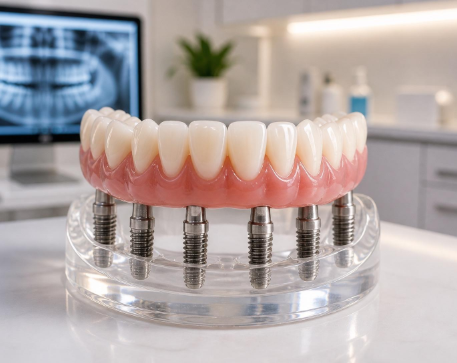
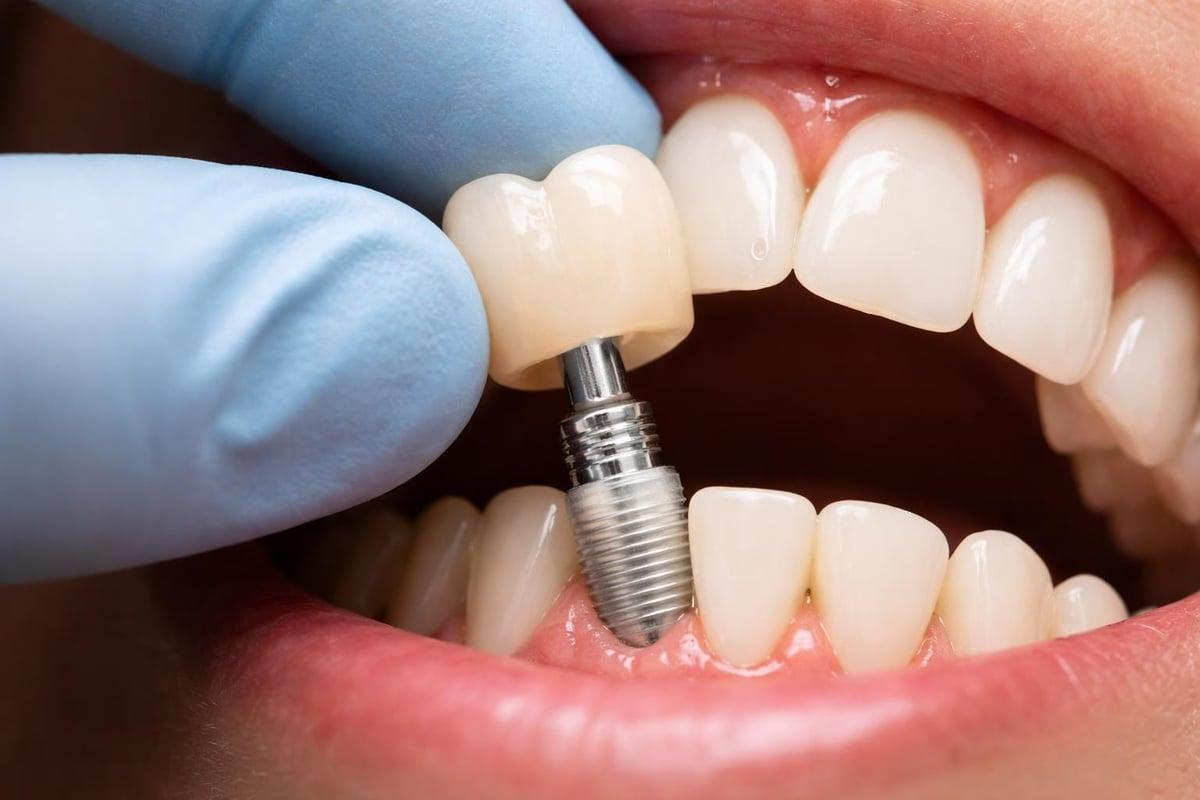
A complete dental implant restoration generally has three components:
1. The Implant Fixture
The fixture is the part placed inside the jawbone. It provides the foundation for the replacement tooth and gradually integrates with the surrounding bone through a process known as osseointegration.
2. The Abutment
The abutment connects the implant fixture to the visible restoration. It may be attached during implant placement or after the implant has healed, depending on the treatment approach.
3. The Dental Crown or Restoration
The crown is the visible artificial tooth fitted over the implant. If several teeth are missing, implants may support a dental bridge or an implant-supported denture instead.
Together, these components help restore chewing function, support the appearance of the smile and provide a fixed alternative to some removable tooth replacement options.
Step 1: Initial Consultation and Dental Assessment
The first stage involves examining the patient’s mouth and determining whether implant treatment is appropriate.
The dentist reviews dental and medical history, checks the condition of the gums and remaining teeth, and evaluates the bite. Previous tooth loss, gum disease, infections and certain medical conditions may influence the treatment plan.
Evaluating Oral Health
Healthy gums are important because inflammation around an implant can affect its supporting tissues. If gum disease or untreated decay is present, these conditions may need attention before surgery.
The dentist may also discuss the patient’s expectations, the appearance of the replacement teeth and whether one or multiple implants are required.
Step 2: Imaging and Treatment Planning
Dental imaging helps the dental professional understand the structure of the jawbone and identify the safest position for implant placement.
Depending on the case, the assessment may include conventional dental X-rays or three-dimensional cone beam computed tomography (CBCT) scans.
These images can help evaluate:
- Jawbone height, width and density.
- The position of nerves and nearby anatomical structures.
- The spacing between neighbouring teeth.
- The location of the planned implant.
- Whether additional bone support may be required.
Treatment planning also considers the final restoration. The implant needs to be positioned in a way that supports proper chewing, comfortable bite alignment and a natural-looking result.
Step 3: Preparing the Jawbone and Gums
Not every patient can proceed directly to implant placement. Some people require preparatory treatment to create suitable conditions for the implant.
Bone Grafting
When a tooth has been missing for a long time, the jawbone in that area may gradually become thinner or shorter. Bone grafting may be recommended to increase the available bone volume.
The graft material provides a framework for new bone development. Healing time depends on the amount of grafting required and the patient’s individual circumstances.
Tooth Extraction
If a damaged or infected tooth remains in the proposed implant area, extraction may be necessary. In selected cases, an implant can be placed immediately after extraction. However, this depends on the condition of the surrounding bone, the presence of infection and the ability to achieve adequate implant stability.
Some patients need to wait until the extraction site has healed before implant placement.
Step 4: Surgical Placement of the Implant
Implant placement is a planned surgical procedure usually performed under local anaesthesia. Sedation may be considered when appropriate.
Preparing the Implant Site
The dentist makes a small opening in the gum tissue to access the jawbone. A carefully measured space is then prepared to accommodate the implant fixture.
The position and angle are important because they influence the stability of the implant and the fit of the final restoration.
Inserting the Implant Fixture
The implant is placed into the prepared area of the jawbone. The gum tissue may be closed over the implant or positioned around a healing component, depending on the surgical technique.
After placement, patients receive instructions about managing discomfort, swelling, eating and cleaning the treated area.
A temporary replacement tooth may be provided in certain cases, but immediate loading is not suitable for everyone. The decision depends on implant stability and individual clinical factors.
Step 5: Healing and Osseointegration
One of the most important parts of the treatment process happens after surgery. The implant needs time to connect with the surrounding jawbone.
This process is called osseointegration. During healing, bone cells gradually develop around the implant surface, helping secure it within the jaw.
The process commonly takes several months, although the timeline varies.
What Happens During Recovery?
Patients may experience temporary swelling, tenderness, bruising or minor bleeding after surgery. These symptoms generally improve as the surgical site heals.
Following post-operative instructions can support recovery. Patients may be advised to:
- Choose soft foods during the initial healing period.
- Avoid chewing directly on the surgical area when instructed.
- Brush carefully around the treated site.
- Avoid smoking and tobacco products.
- Attend scheduled follow-up appointments.
- Contact the dental professional if pain or swelling worsens.
The implant should not be subjected to excessive pressure before it is ready to support the final restoration.
Step 6: Attaching the Final Replacement Tooth
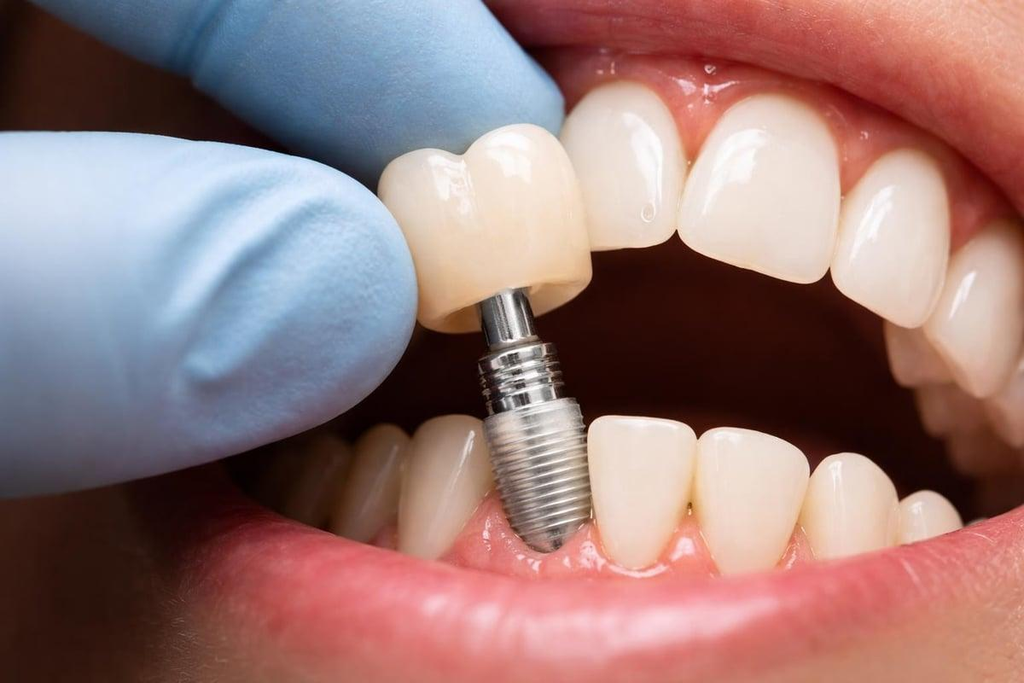
Once the implant has integrated sufficiently with the jawbone, the dentist can proceed with the final restoration.
For a single missing tooth, a custom-made crown is commonly used. If several teeth are missing, an implant-supported bridge may be considered. Patients who have lost most or all of their teeth may be suitable for an implant-supported denture or a full-arch restoration.
Checking the Fit and Bite
The dentist checks the restoration’s shape, colour and alignment with surrounding teeth. Bite adjustments may be necessary to distribute chewing forces appropriately.
The final restoration should feel comfortable and allow the patient to chew and speak naturally. Any persistent discomfort or unusual pressure should be reported for assessment.
Different Types of Dental Implant Treatments
The number of missing teeth and the patient’s oral condition determine which implant arrangement may be suitable.
Single-Tooth Implants
A single implant can support an individual crown when one tooth is missing. It avoids relying on neighbouring teeth for support in the way a conventional tooth-supported bridge does.
Multiple-Tooth Implants
When several adjacent teeth are missing, two or more implants may support a dental bridge. The number of implants required depends on the location of the missing teeth and the planned restoration.
Full-Arch Implant Treatment
Patients missing most or all teeth in an arch may be considered for an implant-supported full-arch restoration. This approach uses strategically positioned implants to support a larger prosthesis.
Not everyone is suitable for every option. A detailed examination is necessary before selecting a treatment design.
How Long Does the Entire Process Take?
Dental implant treatment does not follow the same schedule for every patient. Some cases can be completed within a few months, while others take longer because of bone grafting, gum treatment or additional healing requirements.
The overall timeline may depend on:
- The number and location of implants.
- The quality and quantity of available jawbone.
- Whether teeth need to be extracted.
- The need for bone grafting.
- Individual healing responses.
- The type of final restoration.
Patients should ask for an estimated treatment schedule during their consultation.
Caring for Dental Implants After Treatment
Dental implants require ongoing maintenance even though the artificial crown cannot develop tooth decay. The gums and bone surrounding the implant can still become inflamed if plaque accumulates.
Good aftercare includes brushing twice daily, cleaning between teeth with suitable tools and attending regular dental examinations. Patients should also avoid habits such as chewing ice or using their teeth to open hard packaging.
A condition called peri-implantitis can develop when inflammation around an implant damages the supporting bone. Professional monitoring and consistent home care help reduce this risk.
Conclusion
Dental implants work by placing an artificial tooth root into the jawbone and allowing it to integrate with the surrounding bone before attaching a replacement tooth. The process involves careful assessment, treatment planning, surgery, healing and restoration.
People considering dental implants in Dallas should discuss their oral health, available treatment options, expected timeline and potential risks with a qualified dental professional. A personalised treatment plan helps determine whether implants are appropriate and what steps may be needed to achieve a functional, comfortable tooth replacement.