
Replacing several missing teeth can be challenging, particularly when traditional dentures cause discomfort or make everyday activities difficult. Missing teeth can affect chewing ability, speech and facial appearance. For people who have lost most or all of their teeth, implant-supported restorations offer another approach to rebuilding a functional smile.
All-on-4 dental implants are designed to support a complete arch of replacement teeth using four strategically positioned implants. This technique can reduce the number of implants required compared with some conventional full-mouth treatment approaches. However, the overall suitability, cost and recovery period depend on individual dental conditions.
Understanding affordable all on 4 dental implants involves looking beyond the initial treatment price. Patients should also consider the surgical process, materials, additional procedures, recovery requirements and long-term maintenance.
What Are All-on-4 Dental Implants?
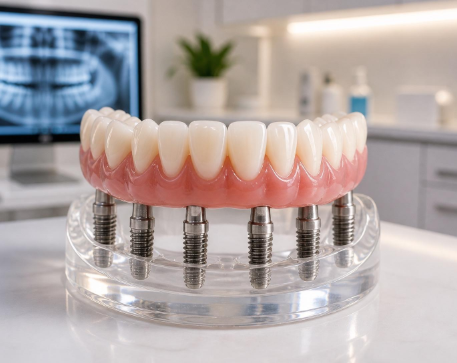
All-on-4 dental implants are a full-arch tooth replacement solution that uses four dental implants to support a fixed set of artificial teeth.
Two implants are generally positioned towards the front of the jaw, while the remaining two are placed at an angle towards the back. This arrangement helps make use of the available jawbone and provides support for a complete dental arch.
Unlike traditional removable dentures, an implant-supported restoration is designed to remain securely attached to the implants.
How Does the All-on-4 Concept Work?
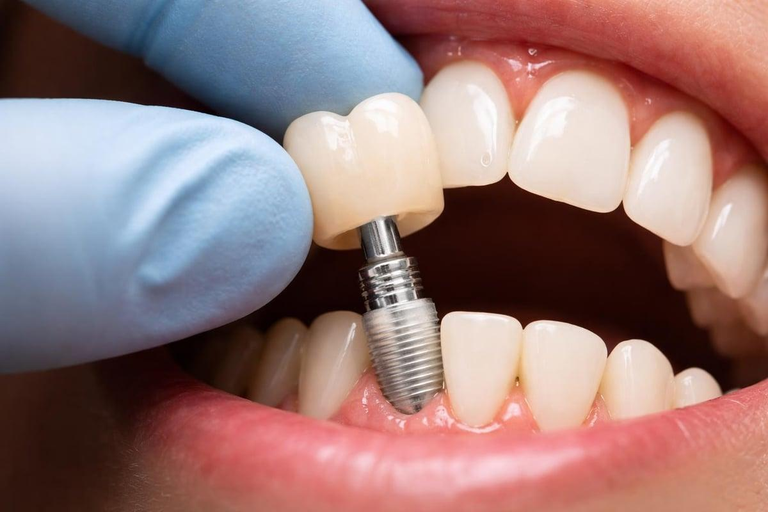
The treatment uses the following components:
- Dental implants: Small titanium posts placed into the jawbone to act as artificial tooth roots.
- Abutments: Connecting components that attach the replacement teeth to the implants.
- Prosthetic arch: A custom-made set of artificial teeth designed to replace the missing upper or lower teeth.
The final restoration is designed to distribute chewing forces across the supporting implants. Careful implant positioning and accurate treatment planning are important for achieving stability.
Who May Be Suitable for All-on-4 Dental Implants?
This treatment may be considered for adults who have lost most or all of their teeth or have several severely damaged teeth that cannot be restored.
It may also be an option for people who experience difficulties with conventional dentures.
However, not everyone is automatically suitable for the procedure. A dental professional needs to assess the patient’s oral health, bone structure and medical history.
Common Factors That Influence Eligibility
A patient may be considered for treatment when they:
- Have multiple missing or severely damaged teeth.
- Have sufficient jawbone support for implant placement.
- Have healthy gums or successfully treated periodontal disease.
- Are in suitable general health for oral surgery.
- Can maintain good oral hygiene after treatment.
Patients with certain medical conditions, uncontrolled diabetes or active gum infections may require additional treatment or medical assessment before surgery.
Although the All-on-4 technique can sometimes help patients with reduced jawbone volume, severe bone loss may require alternative implant approaches or additional procedures.
Understanding the All-on-4 Dental Implant Treatment Process
The treatment involves several stages, from the initial examination to the placement of the final prosthetic teeth. Each stage plays an important role in achieving a functional and stable result.
1. Initial Consultation and Dental Examination
The process begins with a detailed examination of the teeth, gums and jawbone.
The dentist reviews the patient’s medical history and evaluates existing dental problems. Digital X-rays and three-dimensional scans may be used to assess bone volume and identify important anatomical structures.
This information helps determine whether four implants can adequately support the planned restoration.
2. Treatment Planning and Preparation
After the examination, a personalised treatment plan is developed.
The dentist determines the implant positions, restoration design and whether any preparatory procedures are required.
If remaining teeth are severely damaged or cannot be restored, extractions may be included in the treatment plan. Existing gum disease or infections should also be addressed before or during the appropriate stage of treatment.
3. Implant Placement Surgery
During surgery, four implants are placed into the jawbone according to the planned positions.
The procedure is generally performed under local anaesthesia, although sedation may be considered depending on the patient’s needs and surgical complexity.
The angled placement of the rear implants can help make use of available bone and may reduce the need for extensive grafting in selected patients.
4. Temporary Teeth Placement
In suitable cases, a temporary fixed prosthesis may be attached to the implants on the same day or shortly after surgery.
This allows patients to have replacement teeth while the implants heal.
However, immediate loading is not appropriate for everyone. It depends on initial implant stability, bone quality and other clinical factors.
5. Final Teeth Placement
After the healing period, the dentist evaluates how well the implants have integrated with the jawbone.
Once sufficient stability has been achieved, the temporary prosthesis may be replaced with a permanent restoration.
The final teeth are designed to provide appropriate chewing function, comfort and a natural-looking appearance.
What Affects the Cost of All-on-4 Dental Implants?
The cost of treatment can vary considerably between patients and dental practices. There is no single price that applies to every case because several clinical and material-related factors influence the total expense.
Number of Dental Arches Being Treated
Replacing one complete arch generally involves a different treatment cost from replacing both the upper and lower arches.
Patients requiring full-mouth rehabilitation should consider whether the quoted price covers one arch or both.
Materials Used for the Final Restoration
The material selected for the prosthetic teeth can influence the overall cost.
Common options include:
- Acrylic: Often used for certain temporary or long-term prosthetic designs.
- Porcelain: Provides a tooth-like appearance and may be used in selected restorations.
- Zirconia: A durable ceramic material commonly considered for certain full-arch restorations.
Each material has different characteristics relating to appearance, strength, maintenance and cost.
Additional Dental Procedures
Some patients may require additional treatment before implant placement. These procedures can increase the overall expense.
Examples include tooth extractions, treatment for gum disease, bone grafting and other preparatory dental work.
Dental Experience and Treatment Complexity
The complexity of surgery, specialist involvement, diagnostic technology and laboratory work can also affect the final treatment price.
Patients should request a detailed cost breakdown rather than comparing treatment prices based only on the advertised starting amount.
What Is the Recovery Process After All-on-4 Surgery?
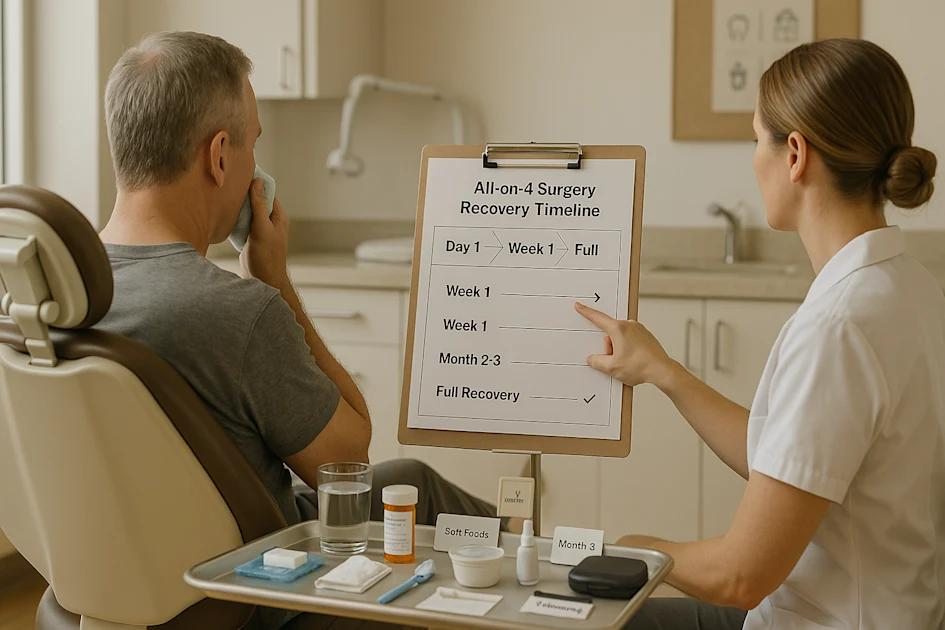
Recovery is an important part of implant treatment. Although patients may receive temporary teeth relatively quickly, the implants still need time to integrate with the jawbone.
Some swelling, tenderness and minor bleeding are common during the initial recovery period.
First Few Days After Surgery
During the first few days, patients may experience:
- Swelling around the gums and cheeks.
- Mild to moderate discomfort.
- Temporary changes in speech.
- Difficulty chewing certain foods.
- Minor bruising around the surgical area.
Dentists may recommend prescribed medication, cold compresses and specific oral hygiene practices to support recovery.
Dietary Changes During Healing
Patients are generally advised to follow a soft-food diet while the implants integrate with the jawbone.
Suitable food choices may include:
- Mashed vegetables.
- Scrambled eggs.
- Yoghurt.
- Soft pasta.
- Well-cooked fish.
- Smooth soups.
Hard, crunchy and sticky foods should be avoided during the recommended healing period. Excessive pressure on the temporary restoration may interfere with implant integration.
Long-Term Healing
Osseointegration is the process through which the surrounding jawbone bonds with the implant surface.
This process commonly takes several months, although the exact duration varies according to bone quality, health conditions and individual healing responses.
Regular follow-up appointments allow the dentist to monitor implant stability and identify any complications.
How Can Patients Maintain All-on-4 Dental Implants?
Long-term maintenance is essential for protecting the implants and surrounding gum tissues.
Although artificial teeth cannot develop cavities like natural teeth, the tissues surrounding dental implants can still develop inflammation and infection.
Patients should follow a consistent maintenance routine that includes:
- Brushing twice daily using an appropriate toothbrush.
- Cleaning underneath the fixed prosthesis with recommended tools.
- Using interdental brushes or water flossers when advised.
- Attending regular professional dental examinations.
- Avoiding smoking and tobacco products.
- Reporting persistent swelling, bleeding or discomfort.
Professional cleaning appointments are particularly important because plaque can accumulate around implant-supported restorations.
Are All-on-4 Dental Implants a Long-Term Solution?
All-on-4 implants can provide long-term tooth replacement when the treatment is properly planned and maintained. However, their longevity depends on several factors, including bone health, implant integration, oral hygiene and biting forces.
The prosthetic teeth may require maintenance, repair or replacement over time, even when the underlying implants remain stable.
Patients should also understand that implant treatment is not completely free from complications. Implant failure, infection, prosthetic damage and inflammation around the implants are possible concerns.
Regular dental monitoring helps identify problems early and supports the long-term health of the restoration.
Conclusion
All-on-4 dental implants offer a treatment option for people who have lost most or all of their natural teeth and want a fixed alternative to conventional dentures. The technique uses four strategically positioned implants to support a complete arch of replacement teeth.
Treatment costs depend on factors such as the number of arches being restored, materials, additional procedures and surgical complexity. Recovery also requires patience, particularly while the implants integrate with the jawbone.
A thorough dental assessment is essential before choosing this procedure. Understanding the treatment stages, financial considerations and maintenance requirements can help patients make informed decisions about restoring their oral function and improving their quality of life.