

After a tree has been removed, the remaining stump can become an overlooked problem for property owners. Although it may appear harmless, an old tree stump can take up valuable garden space, interfere with landscaping and create difficulties when maintaining lawns or outdoor areas. Over time, it may also decay, attract certain insects and produce unwanted regrowth.
For homeowners looking to restore their gardens or prepare an area for future use, stump removal in dandenong ranges can be an important part of completing tree maintenance work. Choosing the right method depends on the stump’s size, age, root structure, location and the intended use of the surrounding space.
Understanding the available removal techniques, their benefits and the factors that affect the process can help property owners make informed decisions.
Why Should You Consider Removing a Tree Stump?
Leaving a stump in the ground is not always a problem, particularly when it is located away from frequently used areas. However, certain situations make removal a practical option.
Improving Garden Appearance
An exposed stump can make an otherwise well-maintained garden look unfinished. This is particularly noticeable in front yards, landscaped areas and lawns where the stump interrupts the overall layout.
Removing it creates a cleaner surface and provides more flexibility when planning new garden features. The cleared space can be used for grass, garden beds, paving or replacement planting, depending on the condition of the soil.
Reducing Trip Hazards
Tree stumps can create obstacles in areas where people regularly walk, play or carry out gardening activities. Low stumps may be difficult to notice when covered by grass, leaves or surrounding vegetation.
Removing the stump or reducing it below ground level can make the area easier to navigate and maintain.
Limiting Unwanted Regrowth
Some tree species can produce new shoots from the remaining stump or root system after the main trunk has been cut down. These shoots may continue appearing even after the original tree has been removed.
The likelihood of regrowth depends on the species and how much of the living root system remains. Appropriate stump and root management can help address this issue.
Common Methods Used for Stump Removal
Different removal methods are suitable for different conditions. A small stump in an accessible garden may require a different approach from a large stump surrounded by established vegetation.
Stump Grinding
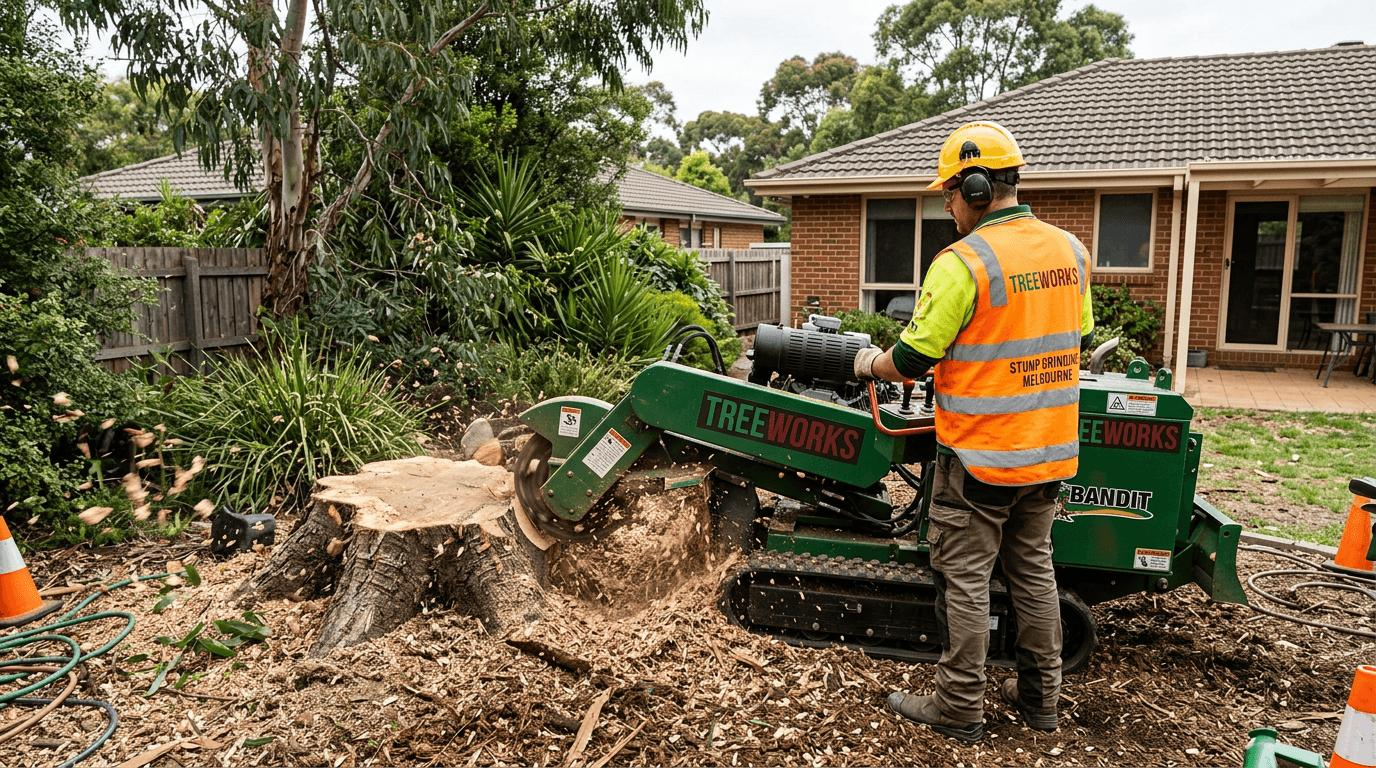
Stump grinding is a commonly used method that reduces the visible stump into small wood fragments using specialised machinery.
The equipment gradually cuts through the stump, bringing it down to a selected depth below the surrounding ground. The resulting wood chips can be collected or used as mulch where appropriate.
Stump grinding may be suitable when:
- The aim is to remove the visible stump without excavating the entire root system.
- The area will be used for lawn or general landscaping.
- Nearby structures make extensive excavation unsuitable.
- The property has limited space for large-scale digging.
One consideration is that the major roots generally remain underground and decay naturally over time. This method may not be appropriate when the entire root system needs to be removed for construction or other purposes.
Complete Stump Extraction
Complete extraction involves removing the stump and a substantial portion of its root system from the ground. This usually requires digging and specialised equipment, particularly when dealing with mature trees.
The process can disturb a larger area of soil than grinding, but it may be preferable when the ground needs to be prepared for building work, substantial landscaping or other projects requiring a clear area.
The amount of excavation depends on the tree species, root spread and soil conditions.
Manual Stump Removal
Smaller stumps may sometimes be removed manually using tools such as spades, axes and digging equipment. This involves exposing the roots, cutting them and gradually loosening the stump.
Manual removal can be practical for small trees with relatively shallow root systems. However, it becomes physically demanding when dealing with mature trees or deeply established roots.
Care is also necessary to avoid damaging underground pipes, cables and nearby structures.
Benefits of Professional Stump Removal
Removing an unwanted stump can improve more than the appearance of a garden. It can also make outdoor areas easier to use and maintain.
Creates More Usable Outdoor Space
A stump can prevent property owners from using certain sections of their gardens effectively. Once removed, the area becomes available for other purposes.
For example, the cleared space may be suitable for:
- Establishing a new lawn.
- Creating additional garden beds.
- Installing outdoor seating.
- Improving access through the garden.
- Preparing an area for replacement planting.
The final use should be considered before selecting a removal method, as this determines how much of the root system needs to be addressed.
Makes Lawn Maintenance Easier
Stumps can interfere with lawnmowers and other gardening equipment. Grass growing around an exposed stump may also be difficult to cut evenly.
Removing the obstruction creates a more consistent surface and makes routine garden maintenance simpler.
Helps Manage Certain Pest Concerns
As a stump decays, it can provide shelter and a food source for some insects and other organisms. Depending on the species and surrounding conditions, decaying wood may attract termites, ants or other wood-associated insects.
However, not every stump will develop a pest problem. Removal may be worth considering when the stump is close to buildings or other timber structures, particularly if there are signs of termite activity.
Supports Future Landscaping
A remaining stump can limit planting choices and interfere with landscaping projects. Removing it allows the ground to be assessed and prepared for future improvements.
The soil may need additional work after removal, particularly where grinding has produced a large quantity of wood chips or extraction has disturbed the surrounding area.
Factors That Affect Stump Removal in the Dandenong Ranges
Properties in the Dandenong Ranges can have varied terrain and established vegetation. These local conditions may influence the equipment, access arrangements and removal method required.
Stump Size and Root Development
Large stumps generally require more time and specialised equipment than smaller ones. Trees with extensive root systems can also make extraction more complicated.
The species of the original tree is relevant because some trees develop deep or widely spreading roots, while others have different growth patterns.
Soil and Ground Conditions
Soil type can affect how easily a stump and its roots can be accessed. Compacted ground, rocky areas and heavy clay may increase the difficulty of excavation.
Properties with sloping gardens require additional planning because loose soil and uneven surfaces can affect machinery positioning and the movement of removed material.
Nearby Structures and Underground Services
Stumps located close to fences, retaining walls, pathways or buildings need careful assessment. Grinding or excavation may also be affected by underground water pipes, drainage systems and electrical services.
Before work begins, underground services should be identified through the appropriate locating process. This helps reduce the risk of accidental damage.
Access for Machinery
Narrow pathways, steep driveways and restricted garden entrances may limit the type of machinery that can reach a stump.
A site inspection can establish whether compact equipment or an alternative removal technique is needed.
What Happens During the Stump Removal Process?
The process generally starts with an inspection to understand the stump’s condition and surrounding environment.
Initial Assessment
The professional examines the stump’s diameter, height, location and visible root structure. The surrounding ground is also checked for obstacles and access limitations.
The intended use of the area is discussed to determine whether grinding or more extensive extraction is appropriate.
Selecting the Removal Technique
After the assessment, a suitable method is selected based on the site conditions. Equipment requirements, working space and possible ground disturbance are considered before work begins.
Carrying Out the Work
For grinding, the machine gradually reduces the stump into wood chips. For extraction, the surrounding soil is opened to expose and remove the stump and accessible roots.
The work area should be kept clear of people, pets and unnecessary obstacles while machinery is operating.
Clearing and Restoring the Area
Once the stump has been dealt with, the remaining wood material and disturbed soil are managed according to the agreed requirements.
The ground may then be levelled and prepared for grass, planting or another landscaping project.
What Should You Check Before Hiring a Stump Removal Professional?
Choosing a suitable provider is important, particularly when the stump is large or located near buildings and underground services.
Consider the following points before arranging the work:
- Experience: Look for experience with different stump sizes, species and property conditions.
- Equipment: Confirm that the machinery is suitable for the stump and available access.
- Insurance: Check that appropriate insurance arrangements are in place.
- Safety procedures: Ask how nearby structures, people and underground services will be protected.
- Written estimates: Request a clear breakdown of the work, including debris handling and site restoration.
- Removal depth: Confirm how far below ground level the stump will be removed.
It is also useful to clarify whether the service includes disposal of wood chips and any additional soil preparation.
Preparing Your Garden After Stump Removal
Once the stump has been removed, the area may need time and attention before new landscaping begins. If grinding has been used, the remaining wood chips should be managed appropriately rather than mixed excessively into soil intended for planting.
For lawn restoration, the area may require fresh topsoil and levelling before grass is established. If new trees or shrubs are planned, consider the previous tree’s location and whether remaining roots could affect the new planting.
Making the Right Decision for Your Property
An unwanted stump can affect garden appearance, outdoor access and future landscaping plans. The most suitable removal method depends on the stump’s size, root development, location and the purpose of the cleared area.
By assessing these factors and understanding the differences between grinding, extraction and manual removal, property owners can choose an approach that suits their needs. Careful planning and appropriate equipment help make stump removal in dandenong ranges a practical step towards creating safer, cleaner and more usable outdoor spaces.
